
NAURU


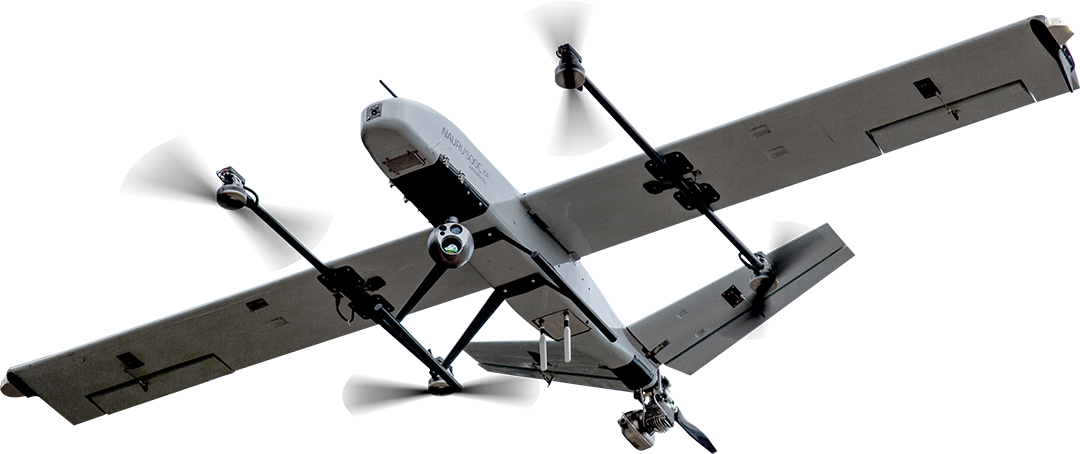
Xmobots presents the most complete and refined system in Latin America developed for the defense market. Designed for tactical operations involving intelligence, surveillance, reconnaissance, and target acquisition, the Nauru 1000C is the system acquired by the Brazilian Army to monitor our borders, and is a piece of equipment of high strategic value for national sovereignty .
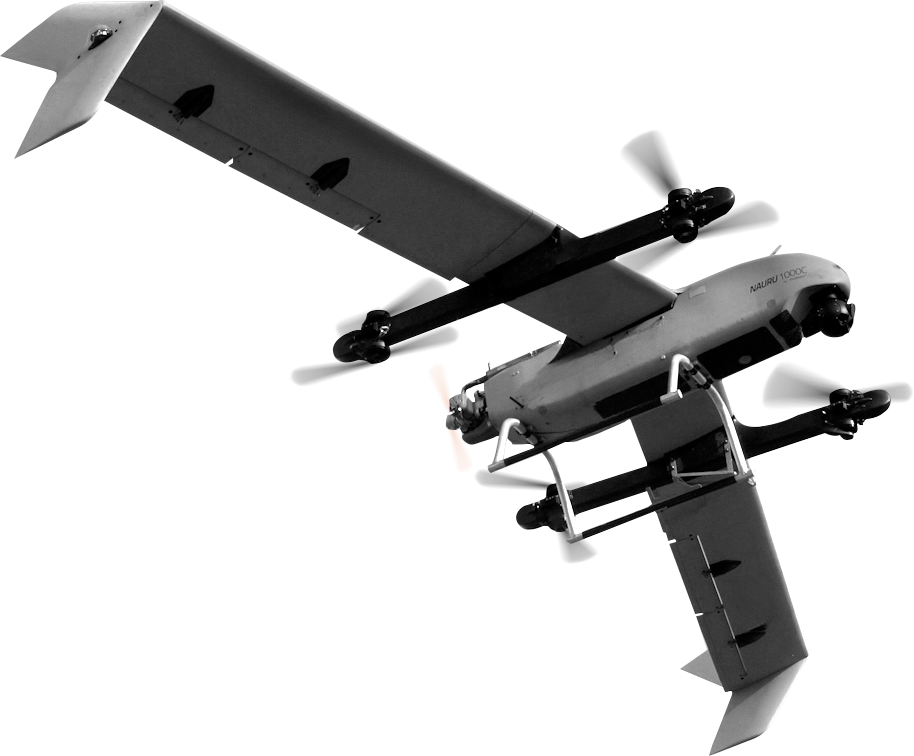


UAS (Unmanned Aerial System) Nauru 1000C ISTAR
Stabilized optronics for ISTAR XSIS applications
Container for transportation and operation of the SARP, with ECS (Ground Control Stations)
GMTI and SAR radars 3D scanners
TTD (Transmission Data Terminals), TED (Data Link Terminal)
Transponder for airspace integration
ADS-b: Lighting system for day and night flights
FPV camera
More than a UAS, Xmobots' Nauru 1000C ISTAR CAT2 is one of the world's most powerful pieces of equipment for security, surveillance and border monitoring missions (land, sea and river).
One of the great distinguishing features of the Nauru 1000C ISTAR is that it is a VTOL (Vertical Take-Off and Landing) UAS, capable of automatic vertical take-offs and landings, making operations very easy.
Its hybrid propulsion system stands out for its high efficiency: for long flights, it uses a low-noise combustion pusher engine; for take-off and landing procedures, the Nauru 1000C relies on 8 electric motors powered by independent batteries.
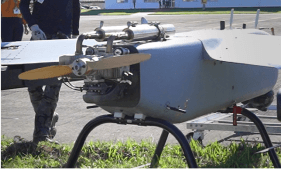

Discretion for secret missions
The Nauru 1000C ISTAR system has stealth features that enhance its operational discretion, such as gray paint that blends into the sky, a low radar signature and reduced sound emissions.
In addition, the aircraft is equipped for airspace integration and aerodrome operation, with items such as a transponder, ADS-B, lighting system for day and night flight, FPV camera, among others. To complement its safety, the Nauru has additional systems, such as a parachute for emergency landings.

Redundancies for safer flights
The Nauru 1000C ISTAR performs various types of aerial monitoring and is highly versatile, having been developed for missions in a variety of scenarios, drizzle, light rain or fog.
Because it has extensive experience in developing avionics systems, Xmobots developed the Nauru 1000C ISTAR with two autopilots, guaranteeing redundancy in all the aircraft's systems, thus offering better safety in operations.
Xmobots is the developer of all the hardware and software for flying and operating the Nauru 1000 C. The only Brazilian company to offer the Defense market a 100% national product, Xmobots offers the possibility of customization for different types of operation, meeting the demands of different Forces and security agencies.
Although it has high on-board technology, the Nauru 1000C ISTAR offers low operating costs compared to other methods of aerial surveillance. In addition, the company offers all operation and maintenance training and integrated logistical support, guaranteeing high availability and continued operability of the system.
Operating concept of theSARP NAURU 1000C ISTAR



Dimensions and weight
7,7 m
wingspan
2,9 m
length
0,98 m
height
60 km - 120 km (optional)
communication range
181 kg
Maximum take-off weight (MTOW)
8 electric motors
with independent batteries
42 kg
Maximum weight of payloads
Main features
VTOL take-off
Vertical Take-off and Landing.
Hybrid propulsion
Combustion and electric (single-engine fixed-wing, octacopter multirotor).
Multimission
IRVA, Electronic Warfare, Target Search, transportation, etc. (depending on the payload).
Autonomy of 10h
Cruising speed 60 kt, service ceiling 10,000 ft.
Range of 60 -120 km
60-120km radius* for wide coverage missions.
*Radio line of sight.
High-tech target detection
The Nauru 1000C ISTAR system features state-of-the-art technology including the XSIS 222A sensor with optronics in the visible spectrum (EO), mid-infrared (MWIR), laser rangefinder (LRF) and laser designator (LP) for surveillance, reconnaissance, intelligence and target acquisition missions.
The XSIS (Xmobots Stabilized Imaging System) sensor, developed by Xmobots, is made up of a high-performance 85 microradian stabilizer system responsible for stabilizing the following components:
EO sensor
Electro-optical camera.
IR sensor
MWIR mid-wavelength infrared camera.
Telerometer
Laser Range Finder for calculating the distance to the target.
IR laser pointer
Infrared pointer

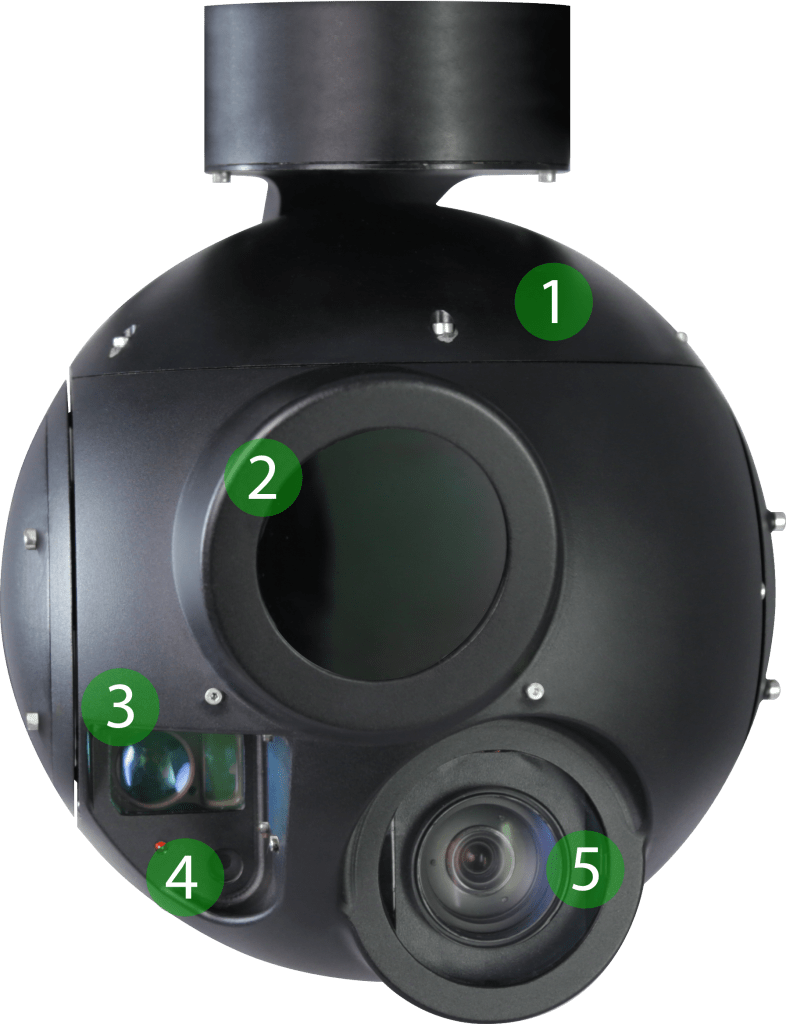
1
Weather-sealed
2
MWIR SD camera with 14x optical zoom
3
Rangefinder
4
Laser pointer
5
Full HD EO camera with 30x optical zoom
High-tech target detection
This system enables the capture of stabilized images in very high definition, both in illuminated and dark environments, by means of its thermal camera. In addition, the XSIS 222A sensor makes it possible to determine the geographical coordinates of targets, automatically track fixed and moving targets, and designate and mark targets using an invisible laser.
Stabilization 85 𝜇rad RMS
Continuous 360° pan and tilt movement between -90° and 10°
Weight 6 kg
Typical power: 50 W
Integration with Enforcer Air missiles

Attentive to the demands of the current geopolitical scenario, Xmobots began a partnership in 2021 with MBDA, Europe's leading missile manufacturer, to develop the armed version of the Nauru 1000C ISTAR.
In this configuration, the drone will be equipped with Enforcer Air missiles, an air-to-ground version of the well-established Enforcer (ground-to-ground) used by the German Army. With a range of more than 5 km, high precision and the ability to neutralize light and agile targets with low collateral damage, the Enforcer Air combines lightness, ease of transport and rapid response.
Integrated with Nauru's VTOL system, with an autonomy of 10 hours and a range of 60km to 120km, the armed solution combines intelligence, target acquisition and attack power at a low operating cost.
Compatible with the version already in use by the Brazilian Army, the armed Nauru 1000C ISTAR represents a strategic advance, allowing the same platform to carry out surveillance and attack missions, boosting Brazil's defense industry.

Weight
7.5 kg
Length
900 mm
Diameter
88.9 mm
Mission
Battlefield
Warhead
Multi-effects
Protection
Land assets
Mobile Operations Center
Like the Nauru 500C ISC, the Nauru 1000C ISTAR also has an operations center designed to provide operational comfort and safety for the system's operators. It can be designed in a 2.5 ton towed shelter, or in a compact container of just 20 ft.
In both models, the Nauru 1000C ISTAR mobile station has the capacity to store 3 RPAs, 2 GDTs (Ground Data Terminals) and 3 state-of-the-art GCSs (Ground Control Stations). They are made up of 3 multifunctional 21.5" touchscreens, from which it is possible to follow data from the aircraft's primary instrumentation, a moving map of the mission and images transmitted in real time by the sensors.
The Container/Shelter is a compact resource, just 20ft standard, with the capacity to store 3 RPAs, 2 GDTs (Ground Data Terminals) and 3 GCSs (Ground Control Stations). The entire system can be assembled quickly, in up to 4 hours. As a result, the operations team is protected during missions.
The container with its control station has fingerprint access, emergency lights, air conditioning and ergonomic seating. This comfort guarantees reduced stress for operators during missions.
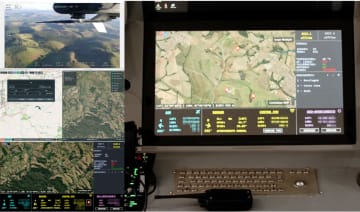
Interface for operating payloads (XPayloadviewer)
Coordinates of the aircraft, target and FOV; tilt limit of the filmed target, angular position of the EOIR sensor numbering; zoom, air traffic, meteorology.
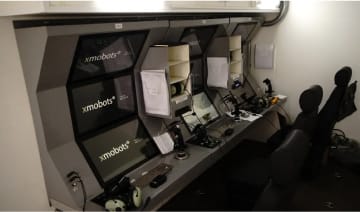
General control interface (Control stations)
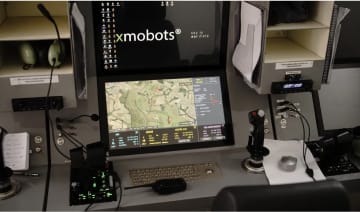
RPA primary data instrumentation (XCockpit)
The GCS of the Nauru 1000C ISTAR are configured to generate greater operational efficiency
GCS 1: Remote operation of RPA 1.
GCS 2: Sensor operation and redundancy option.
GCS 3: Remote operation of RPA 2.
Xmobots is the developer of all the components involved in the NAURU 1000C ISTAR System. That's why we offer efficient, personalized and targeted technical support, maintenance and training.
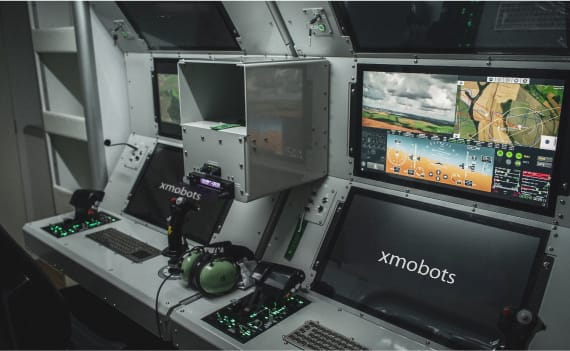
Compact storage mode
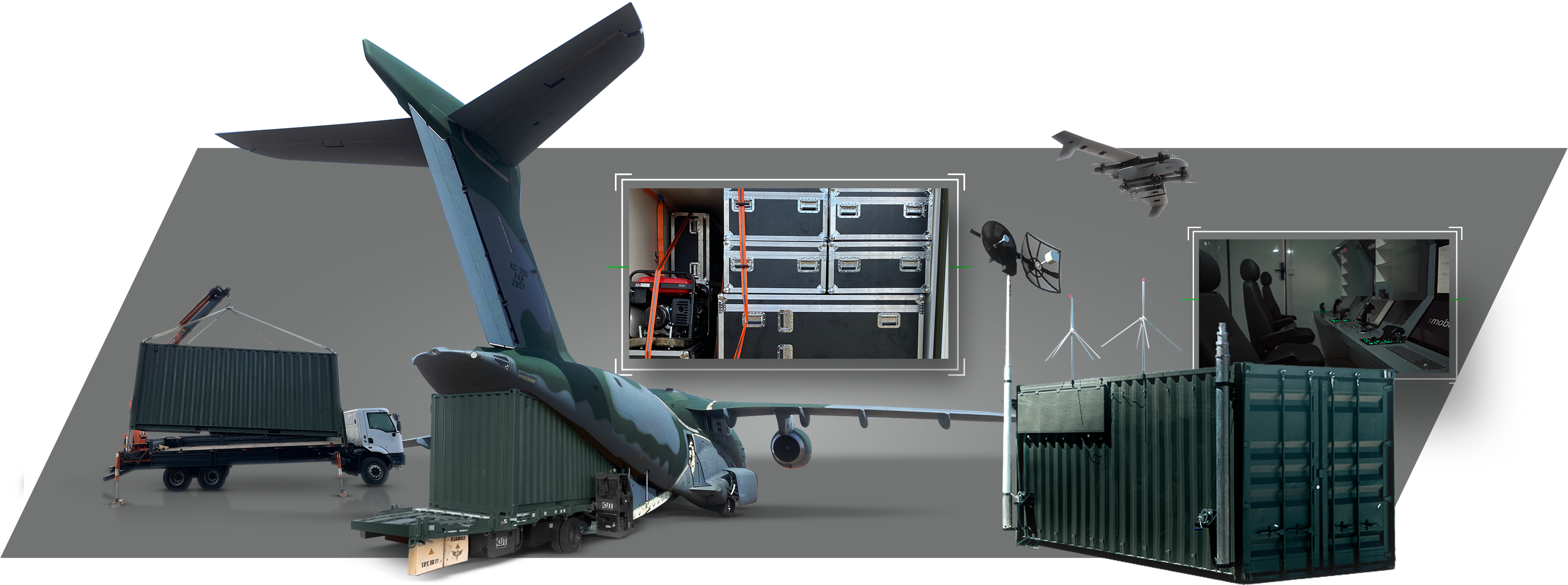
Systems and Redundancies
Typical operating scenario
NAURU
See also

XSIS 222A
- Manned Aircraft
- O XSIS 222A é um sensor EO/IR nacional desenvolvido para ampliar a consciência situacional de helicópteros em operações de segurança pública, patrulhamento...

- ISTAR & UCAV
- The Nauru 100D redefines the operational scope of military missions. With high-level intelligence, unparalleled precision and an undetectable system, this drone is an essential platform for surveillance, reconnaissance and target acquisition, and the interception...
XSIS 222A
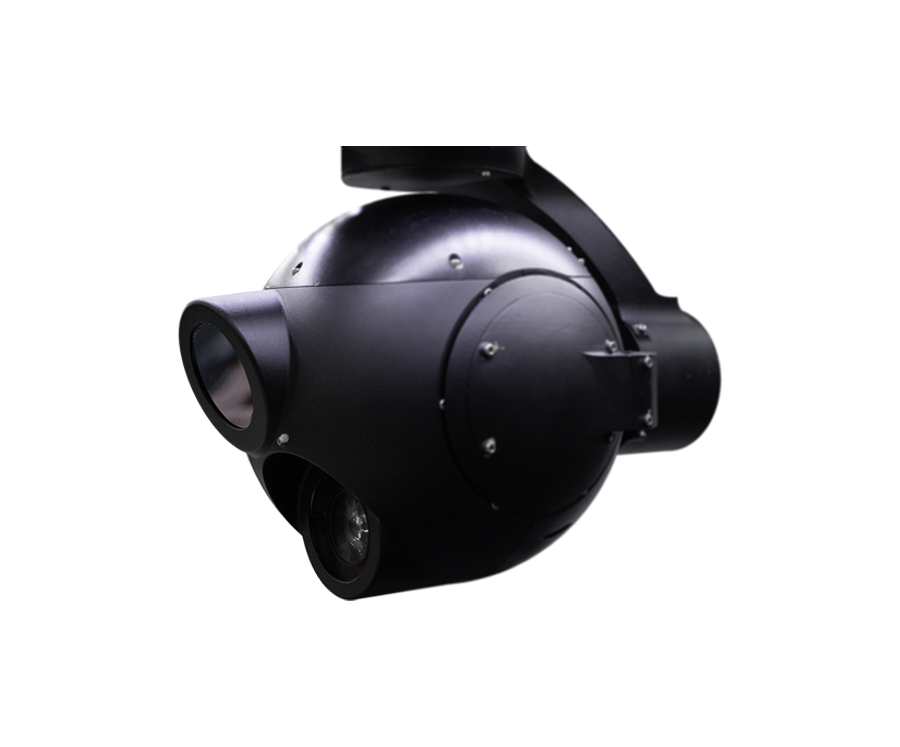
- XSIS 222A is a 3-axis gimbal system designed for intelligence, security, surveillance and rescue missions.
XPATROL
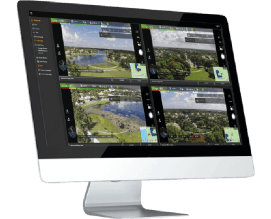
- XPATROL is an advanced aerial platform for security and surveillance, with cutting-edge technology for continuous monitoring and threat detection, ideal for sensitive and extensive areas.
NAURU 500C ISR
- The Nauru 500C is a high-performance drone for aerial mapping and monitoring. The only class 3 drone authorized by ANAC in Brazil to carry out night flights and missions with a range of 60 km, the Nauru 500C is the ideal RPA for high-performance intelligence missions.