
Brazilian drone detects fires 30 km away and offers rapid response
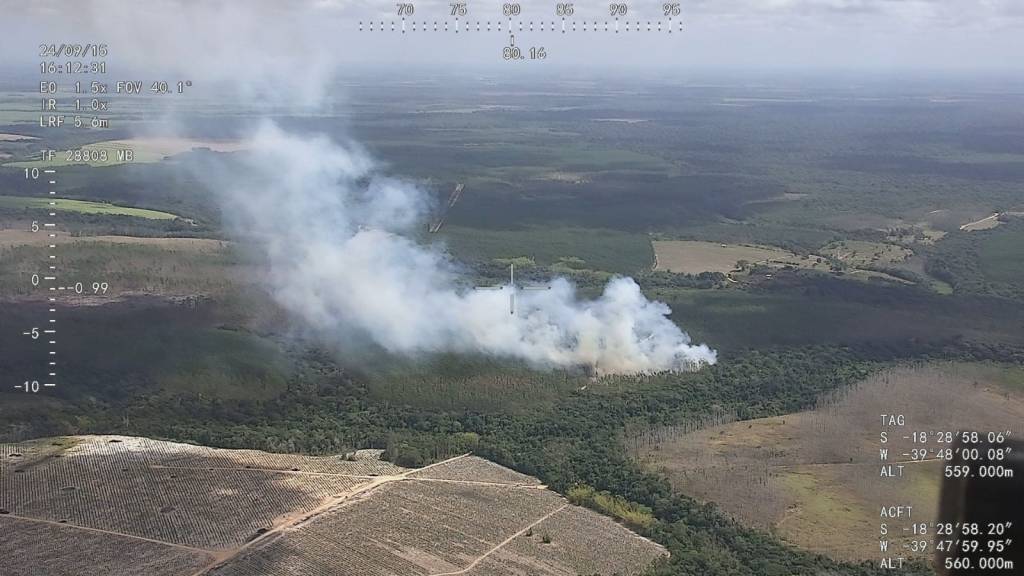
With climate change intensifying, Brazil is facing an increasingly challenging scenario in the countryside. Extreme events such as prolonged droughts and forest fires have become more frequent.
You may like: Forest fires in Brazil, devastating impacts and the drone as a technological solution
This panorama makes the second half of the year even more critical, when the dry season favors the rapid spread of fire in rural areas, causing significant environmental and economic impacts.
According to a survey by the Confederation of Agriculture and Livestock of Brazil (CNA), between June and August 2024, there was an estimated loss of R$14.6 billion as a result of the fires. Among the main losses are:
- R$8.1 billion in livestock and pastures;
- R$ 2.7 billion in sugarcane production;
- R$ 1 billion in various crops;
- R$2.8 billion in structural losses, such as fences.
Direct impact on Brazilian agribusiness
In October 2024, 500 cities recorded agricultural losses of more than 80%, with 2.8 million hectares of rural properties set on fire, directly affected by the high temperatures that facilitated the spread of the fire.
These fires affected not only crops, but also entire structures and production chains. Small producers and large companies have suffered significant losses.
One of the most striking examples was that of a French multinational present in various regions of São Paulo, which recorded the loss of 1.7 million tons of sugarcane, an amount equivalent to 10% of its production in Brazil. The estimated financial impact was R$100 million.
Traditional methods can't keep up with the speed of fire
Despite technological advances on many fronts, many producers still resort to traditional methods to detect fires. However, these resources have proved limited in the face of the urgency and escalation of the problem.
Satellite monitoring, for example, suffers from limitations on cloudy days or with low atmospheric visibility. Ground patrols, whether on foot or with vehicles, are slow, with restricted coverage and a high risk to the integrity of the teams.
Another alternative, the use of manned aircraft, is expensive and depends on good weather conditions to operate. There are still cases where fire detection depends on communication between neighbors, compromising quick and effective action.
Drones in agriculture: integration into the field routine is a reality
According to data from the Ministry of Agriculture and Livestock (MAPA), the number of drones in operation in Brazil has jumped from 3,000 in 2021 to more than 35,000 in just a few years. This evolution means that drones are already part of the reality of the countryside.
As well as being used for spraying and dispersing inputs, and for mapping crops, drones are now being used for a strategic function: environmental surveillance and detecting outbreaks of fire.
Drones as allies in the fight against fire
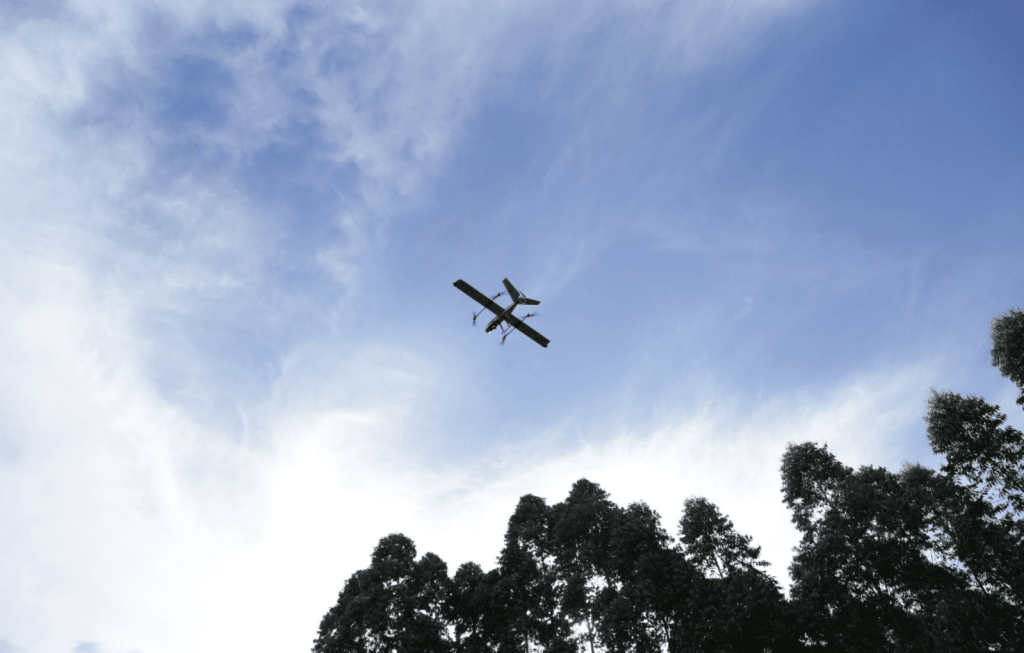
Developed and manufactured in Brazil, the Nauru 500C ISR by Xmobots - the largest drone company in Latin America and the 6th largest in the world - combines autonomy, robustness and remote sensing capabilities.
Read also: Xmobots travels through Brazil to present the Nauru 500C ISR

Its use enables rapid responses, reduced damage and greater safety for the parties involved. Among the main benefits of the technology are:
- On-board sensor, with RGB and thermal image capture;
- Detection of fire outbreaks up to 30km away, even in low visibility;
- Real-time transmission for monitoring;
- Flight autonomy of 4 hours and operational range of up to 60 km;
- Vertical take-off and landing (VTOL), with no need for runways or large structures;
- ANAC authorization for BVLOS(Beyond Visual Line of Sight) flights, above 400 feet and night operations.
Read more: Partnership between Natura and Bioverse uses Xmobots drone for Amazon Mapping and Artificial Intelligence

Intelligence applied to emergencies
In addition to its efficiency, the Nauru 500C ISR stands out for its cost-effectiveness. Compared to manned helicopters, the drone is a safer and more economical alternative.
Stay informed: Unprecedented ANAC authorization allows night flight of Nauru 500C ISR drone
In addition to eliminating the need for high fuel costs, pilots and risky travel, aerial surveillance with drones also makes it possible:
- Continuous monitoring of large areas (24/7);
- Preventive action based on data;
- Reduced response time in emergencies;
- Less human exposure in critical areas.
"The Nauru 500C ISR anticipates the problem. It's a technology that guides action at the right time, reduces risks and avoids major losses. An innovation designed to protect producers, their assets and their productivity." says Xmobots' Commercial Director, Thatiana Miloso.
Worth a read: Brazilian Navy incorporates Nauru 500C drone into search and rescue missions
National solution to recurring challenge
In a scenario where climate change is increasingly impactful, technological solutions are gaining relevance.
You may like: VTOL technology revolutionizes drone operations
The Nauru 500C ISR reinforces the role of the drone as a protection, intelligence and surveillance tool in Brazilian agriculture, acting before the fire spreads and making a real impact in reducing losses and ensuring the safety of field operations.