
Forest fires in Brazil continue to grow in number and intensity, putting not only biodiversity at risk, but also people's health and the climate balance.

According to data from the National Institute for Space Research (INPE), Brazil faced 28,697 thousand outbreaks of fire in the Amazon in August 2024 alone, an increase of 83% compared to the same period the previous year.
This increase is mainly concentrated in the dry season, when the practice of burning for deforestation and agricultural expansion becomes even more recurrent.
In this worrying scenario, the use of advanced environmental monitoring technologies, such as Xmobots' Nauru 500C ISR drone, is a key tool.
With its innovative capabilities, this drone can help in the early identification of fire outbreaks and provide real-time data that facilitates firefighting and the protection of ecosystems.
In this article, we discuss the devastating impact of wildfires and how the drone can be a crucial ally in forest monitoring.
Impacts and damages of fires in Brazil
The advance of burning in Brazilian forests has had devastating effects. The Amazon, the world's largest tropical forest, is suffering irreversible losses of biodiversity, with endemic species disappearing before they have even been studied.

In addition, deforestation caused by fire releases huge amounts of CO₂, aggravating global warming.
According to a report by the NGO WWF-Brazil, fires in the Pantanal in 2024 have already resulted in the destruction of between 8.5 and 12.2% of environmental protection areas. This has a direct impact on the ability of ecosystems to recover and threatens the balance of the entire region.
Fires have significant socio-economic effects, such as the loss of agricultural productivity, a drop in drinking water production and worsening public health problems.
Fiocruz warns that prolonged exposure to smoke from fires is linked to an increase in respiratory diseases, especially in children and the elderly.
With a still limited monitoring network and logistical challenges in the most remote areas, more modern and effective tools are needed to control this growing problem.
The role of technology in monitoring fires
Monitoring fires has traditionally been done using satellite images and ground observations. However, these methodologies face limitations, such as low resolution in very dense areas and the difficulty of monitoring outbreaks in real time.
"Satellite images are good for getting a broad view when monitoring, but it depends on many variables, such as the time the image was taken and how few clouds there are. When something is observed by satellite, drones come to complement the tactical action, being able to have a closer view of the place and in real time," explains Leandro Diniz, a PhD student in INPE's Applied Computing Postgraduate Program.
And this is where Xmobots' Nauru 500C ISR comes in as a solution that can transform the fight against fires.
The Nauru 500C ISR: an advanced tool for environmental monitoring
The Nauru 500C ISR is a 100% national high-tech drone designed for intelligence, surveillance and reconnaissance missions. Its technical capabilities are ideal for monitoring large areas that are difficult to access, such as the Brazilian rainforests.
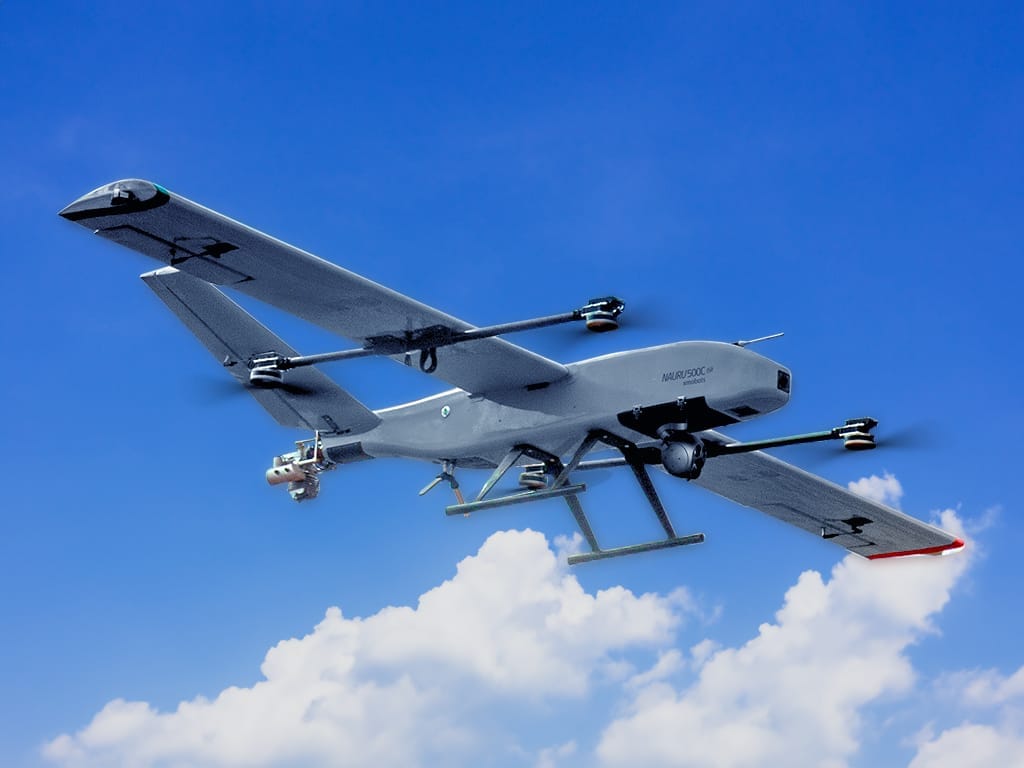
Below, we highlight some of its features that make it a powerful tool in the fight against fires:
- Extensive autonomy: the Nauru 500C ISR has a flight autonomy of up to 4 hours and a range of 60km, which allows it to monitor large areas without the need for frequent landings to recharge. This is essential in regions such as the Amazon, where quick access by land is limited.
- VTOL (Vertical Take-off and Landing) technology: the Nauru is a vertical take-off and landing drone, which means it can operate in hard-to-reach areas without the need for runways.
- Stabilized Gimbal and High-Definition Cameras: equipped with a 3-axis gimbal, the Nauru 500C ISR has high-resolution cameras and sensors that allow it to capture images even in poor visibility conditions, such as at night or in smoke.
- Thermal Sensors: the drone also has advanced thermal sensors that detect temperature anomalies, making it possible to identify fire outbreaks before they become visible to the naked eye or by traditional monitoring methods.
- Real-time data transmission: another important feature of the Nauru 500C ISR is its ability to transmit data in real time to firefighting and monitoring teams.
- Certification: this is the only Brazilian aircraft with Special Airworthiness Certification for RPA (CAER) for BVLOS flights above 400 feet day and night issued by the National Civil Aviation Agency (ANAC). In addition, the Nauru 500C ISR is the only drone that can be contracted for acquisition and/or provision of services.
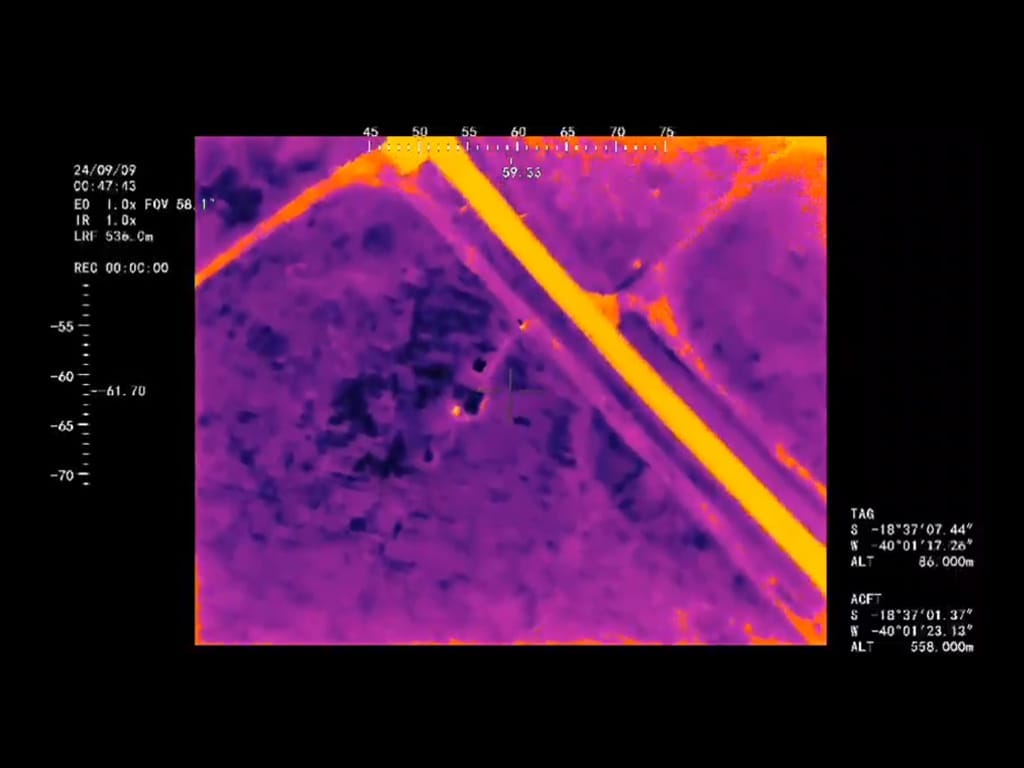
The satellite and radio connection ensures that the information collected by the drone can be accessed instantly, enabling quick and effective decision-making.
"The Nauru 500C ISR can observe square kilometers in real time in seconds, giving operators the exact location of possible targets in real time. The automatic flight makes it very easy for operators to focus their efforts on observing the terrain through the thermal camera," explains Pedro Morais, technical consultant at Xmobots.
As well as being effective in detecting fire outbreaks, Pedro points out other uses for the drone that make it versatile in other segments:
- Fighting illegal mining;
- Combating selective logging;
- Inspections of power lines and hydroelectric structures;
- Combating the invasion of private property and indigenous lands;
- Combating illegal mining.
- You may also like: Navy's Aeronautical Directorate conducts demonstration of SARP Nauru 500C
Conclusion
Forest fires in Brazil continue to be one of today's biggest environmental challenges. The need for quick and effective solutions is increasingly urgent, especially with the increase in deforestation and climate change.
The use of advanced technologies, such as Xmobots' Nauru 500C ISR, could be a game changer in the fight against this problem.
In addition to monitoring large areas in real time, the Nauru 500C offers precision in identifying fire outbreaks and helps optimize the allocation of firefighting resources.
The future of environmental monitoring in Brazil could be more efficient and safer with the use of drones like the Nauru 500C ISR, which combines cutting-edge technology with a practical approach to preserving our ecosystems.
Visit www.xmobots.com.br and find out more about our products and services.