
In recent years, Brazil has faced a challenging scenario in the area of public safety. The advance of criminal factions, the increase in armed violence, and the expansion of drug trafficking require increasingly technological and strategic responses from police forces. In this context, surveillance drones have emerged as an indispensable tool for surveillance, intelligence, and combating organized crime.
Territorial disputes between factions, especially in the large cities of Rio de Janeiro, São Paulo, and Ceará, have led to armed conflicts. This puts not only security agents but also the civilian population at risk.
The complexity of these operations, in areas that are difficult to access and high-risk, makes it essential to use technologies that offer accurate aerial vision, discretion, precision, and artificial intelligence. And this is precisely where surveillance drones come in as strategic allies in the fight against crime.
Brazilian police operations have shown how the use of drones by organized crime has also become a reality. Criminals have been using equipment for a variety of purposes. For example: monitoring troop movements, anticipating actions by security forces, and adapting drones to deliver small packages and even drop improvised bombs.
Given this scenario, equipping police forces with professional surveillance drones has become an urgent necessity in order to balance this technological dispute.

Brazilian public security and the challenge of modernization
Brazil has one of the highest crime rates in the world, with challenges ranging from international drug trafficking to border control and urban security.
According to the Brazilian Forum on Public Safety, the country exceeds 40,000 homicides annually, and drug trafficking remains one of the main causes of violence.
Despite acting with courage and commitment, police forces still face operational and technological limitations. The use of surveillance drones allows them to expand the scope of their surveillance activities, reduce human risks, and increase the efficiency of strategic operations.
These unmanned aircraft provide a panoramic and detailed view of the terrain, making it possible to identify suspects, map escape routes, and track movements without putting agents in danger.
- Next, read also: Aerial patrols are an alternative to prevent theft and robbery
Surveillance drone: keeping an eye on the territory
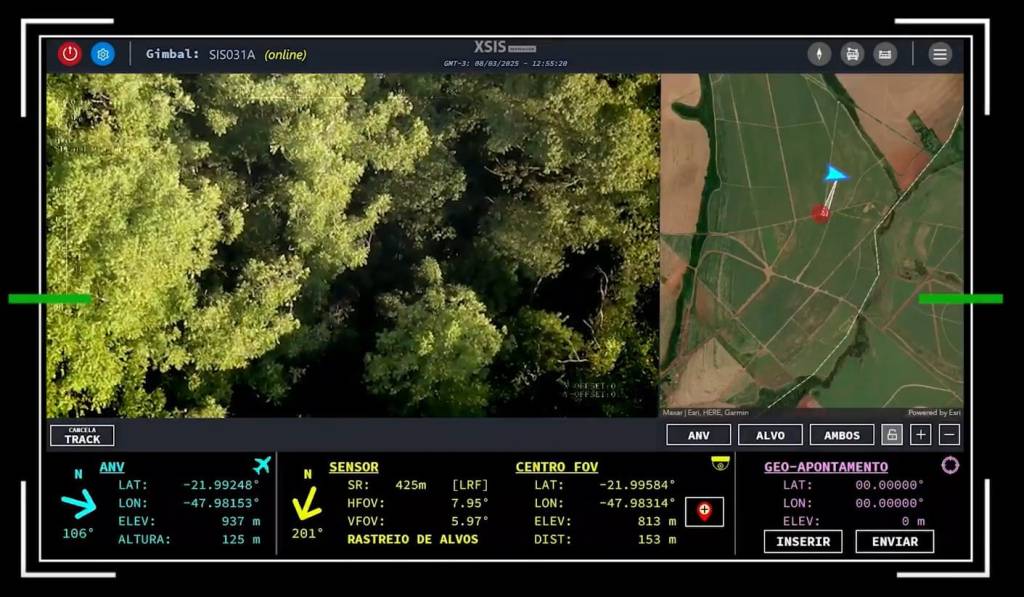
Surveillance drones are capable of operating in hazardous areas without direct exposure of personnel. Therefore, they are essential in surveillance, reconnaissance, target acquisition, and interception missions.
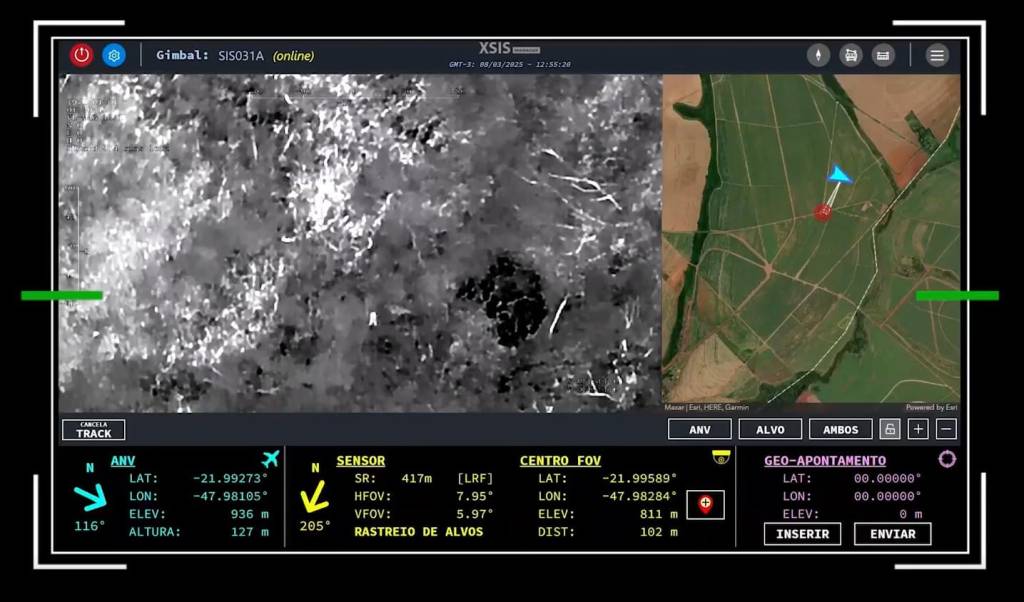
With thermal sensors, high-resolution cameras, and real-time transmission, they ensure a privileged view and quick, accurate decision-making.
In addition, drones expand intelligence and investigation capabilities. By flying over regions dominated by factions, for example, it is possible to collect aerial images to identify strategic points, trafficking routes, or hideouts.
This technology is also effective in search and rescue operations, allowing people to be located in hard-to-reach areas such as forests, slums, or flooded areas with precision and agility.
When crime also uses drones
The use of drones by criminal organizations is a reality that concerns authorities around the world, and Brazil is no exception. In a recent police operation in Rio de Janeiro, officers identified drones being used by gangs to monitor troop movements and drop bombs on officers.
This type of action reinforces the urgency of equipping police forces with professional surveillance drones capable of operating discreetly and using advanced technology.
The technological war between law enforcement and organized crime has already begun. Investing in high-performance equipment is essential to ensure that police intelligence remains one step ahead.
The impact of surveillance drones on public safety
Among the main benefits of using drones in public safety are:
- Reduction of operational risks: less exposure of police officers in areas of conflict.
- Increased operational efficiency: target identification and real-time tracking.
- Resource optimization: lower cost compared to helicopters and vehicles.
- Improved evidence collection: high-quality images and videos can be used in investigations and legal proceedings.
- Integration with intelligence systems: data obtained by drones, such as facial recognition and license plate reading, can be cross-referenced with information databases, expanding analysis and decision-making capabilities.
These factors demonstrate that the surveillance drone is more than just an aerial tool; it is a strategic piece in the modernization of Brazilian security forces.
The invisible ally: meet the Nauru 100D
In the field of public safety, discretion is a valuable asset. That is why the Nauru 100D, developed by Xmobots, stands out as a true invisible ally in surveillance operations.
Its design and flight system allow it to operate without being easily detected, drastically reducing the chances of being seen, shot down, or having its signal blocked by criminals.
Compact and easy to transport, the Nauru 100D can be carried in any vehicle and quickly assembled, allowing flight operations to be set up in virtually any hard-to-reach environment.
With extended autonomy, long-range reach, and high-altitude flight capability, the drone is ideal for search missions, target tracking, and monitoring large perimeters. It combines cutting-edge technology, stability, and precision, ensuring high-quality images even in adverse conditions.
Made for professional and military use, the Nauru 100D was designed to meet the demands of public safety, defense, and strategic surveillance, making it an essential resource for police and security forces that want to increase their operational capacity and protect their teams with high-performance national technology.
- Learn more about the Nauru 100D at: https://xmobots.com.br/produto/nauru-100d/
Conclusion: technology as an ally of security
The reality of crime in Brazil demands quick and intelligent responses. The use of surveillance drones is no longer a future trend, but a present necessity. Investing in technology means investing in the protection of life, in the efficiency of operations, and in the sovereignty of the country in the face of the advance of organized crime.
As factions modernize and incorporate new resources into their actions, it is up to security forces to adopt technologies that ensure strategic superiority. In this scenario, the Nauru 100D emerges as the ideal response, combining discretion, mobility, and long-range flight capability.
More than just a piece of equipment, it is the invisible eye that protects Brazil, a tool that puts intelligence and technology at the service of public safety.
- Finally, you may also like: Forest fires 2025: challenges and preventive technology