
XMobots, the largest drone developer in Brazil and Latin America, has achieved an important milestone for the sector: the company has obtained the first project authorization from ANAC (National Civil Aviation Agency) for BVLOS(Beyond Visual Line of Sight) flights up to 30 km and/or above 400ft (120m AGL - Above Ground Level). The Echar 20D drone was the holder of the authorization.
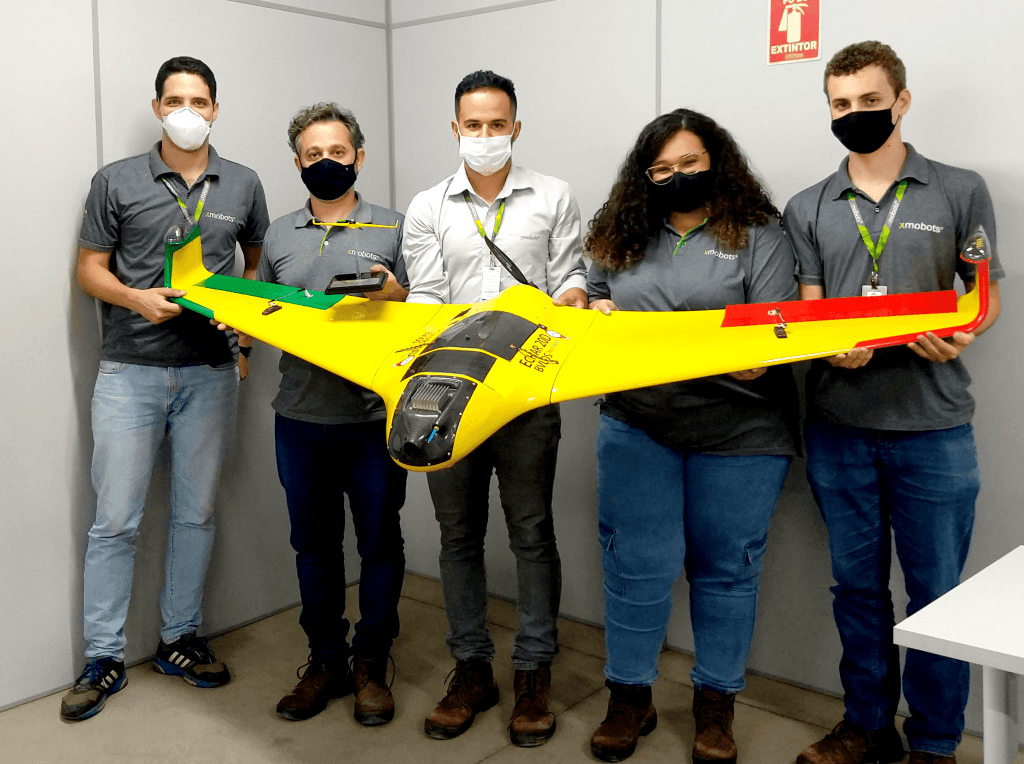
XMobots was already the first company in Brazil to obtain ANAC design authorization for flights above 400ft, issued for the Arator 5B RPA in 2018. With this new approval, the company continues to pave its pioneering path in the sector, with the development and use of national technologies for navigation, control, guidance, communications, cockpit interface software and other embedded systems, allowing drones like the ECHAR 20D to be exploited to their full capacity. "This project approval represents a milestone precisely because it allows long-range missions with compliance with the safety criteria and airworthiness requirements applicable to BVLOS operations that break the 5 km BVLOS barrier, expanding the envelope to 30 km," says Décio Gomes, Certification Coordinator at XMobots.
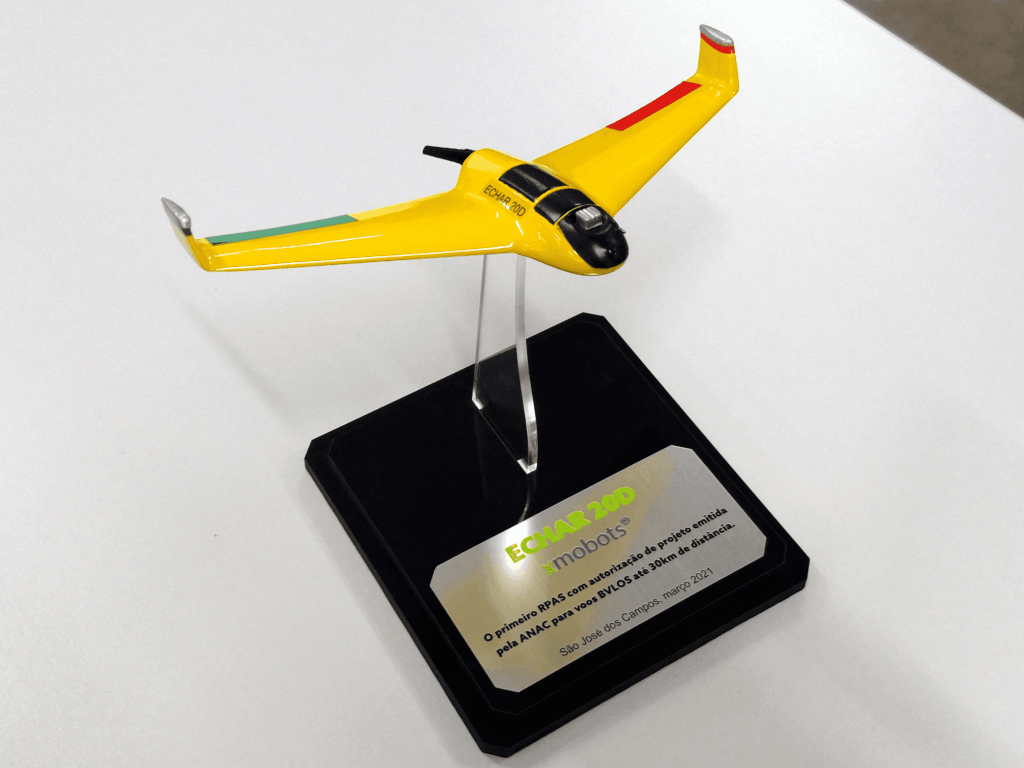
For the company's CEO, Giovani Amianti, obtaining project authorization for BVLOS flights of up to 30 km and/or over 400ft is yet another stage in the company's strategic plan, demonstrating the expertise and consolidation of the company's R&D in the development of high-performance and increasingly automatic aircraft. "XMobots has invested heavily in improving its engineering. Long-distance drone operations will play an important role in the company's future and, with this project approval, we are taking a very important step in this direction," he points out.

About the project authorization process
In order for the authorization to be issued, a number of analyses were required, including reviews of the design, processes, manuals and the issuing of technical safety reports, as well as the carrying out of various development tests, with the main aim of demonstrating and carrying out means of complying with the requirements of the certification basis, so that a satisfactory level of safety was achieved, within the acceptability criteria established by the Agency.

"The effort to reach this stage is remarkable and is worthy of congratulations. It's interesting to see it 30 km away from the remote operator.
Certainly, on the world stage, if we take into account all the safety specifications that are in place, we will find few players. And this process prepares the company to seek out the international scene, prepares Brazil to publicize and encourage an industry here, and for us to include these topics that are bilateral for the acceptance of Brazilian aircraft, there are usually reciprocities, but I see the industry as strong and there's no reason to fear reciprocities. The sector as a whole develops," said Roberto Honorato, Superintendent of Airworthiness at ANAC.
"We've seen XMobots grow and mature, the launch of new products such as the Dractor, and the evolution of the company's engineering. When I took part in the Arator project authorization, there were just over 40 employees occupying an area of 1,000 square meters. Today you have 170 employees occupying a 6,000 square meter facility. And this evolution goes further: reading and analyzing reports on the Echar process, we see the maturity of the engineering and certification sector, both in discussing requirements and in the way they are met. The company is to be congratulated. XMobots is paving the way, both in the market and in engineering and certification," said Rui Carlos Josino Alexandre, a specialist in civil aviation regulation at the CDNT (Coordination of Drones and New Technologies).
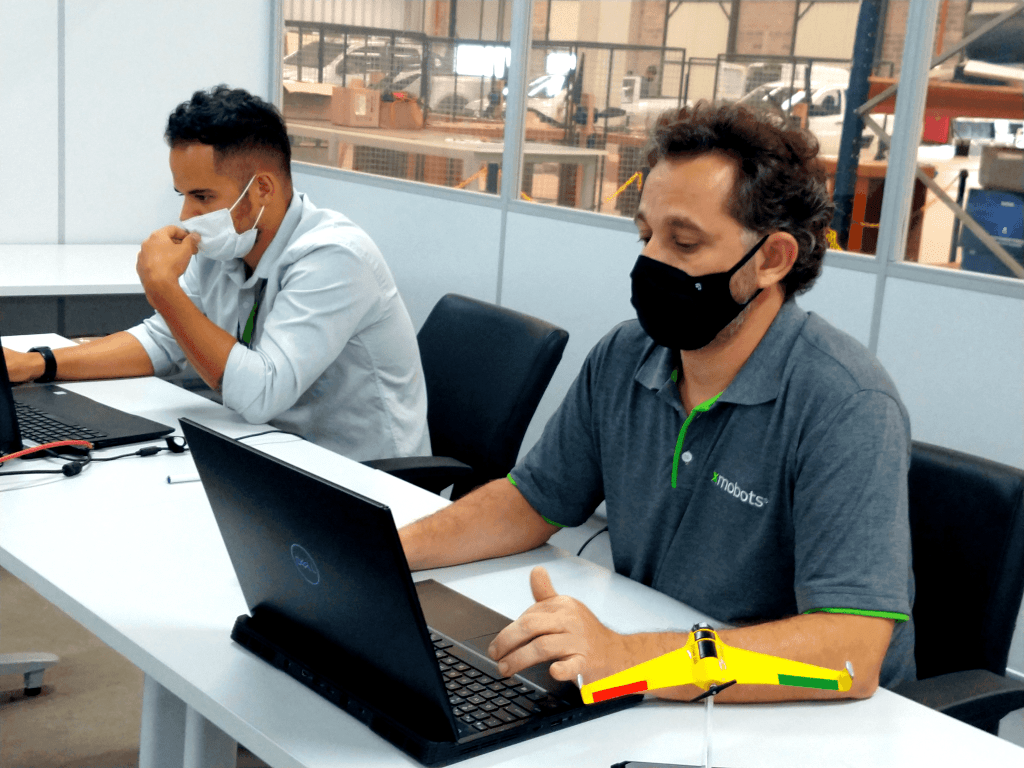
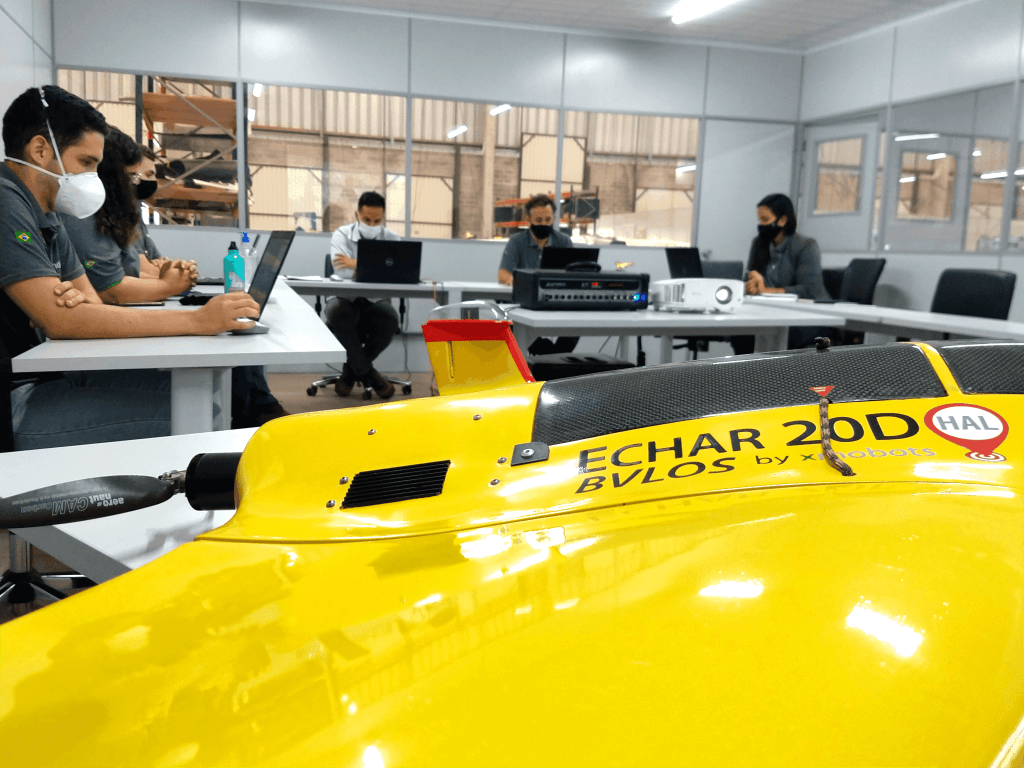
The authorization issued allows serial numbers, in accordance with the authorized design, to receive an RPA Special Airworthiness Certificate (CAER), indicating the aircraft's ability to operate safely on flights at altitudes of up to 6000ft AMSL(Above Mean Sea Level) and at distances of up to 30 km from the take-off point.
Also check out the release published by ANAC on the Echar 20D's design authorization for BVLOS flight: https://www.gov.br/anac/pt-br/noticias/2021/anac-autoriza-drone-com-capacidade-para-voar-distancias-de-ate-30-km