
INNOVATION is the key word that drives XMobots. If we consider a product or service that already exists on the market, we apply our technical expertise to create something superior, with better performance and that really surprises customers and generates great results.
Among all the innovations generated at XMobots, we can mention products developed specifically for sugarcane productivity, such as the XMC sensor and the XFarming software.
XMC SENSOR
This camera was developed by XMobots so that the sensor could work with spectra specific to the sugarcane crop, allowing visible (RGB) and invisible (NIR - Near InfraRed) spectrum waves to pass through. The XMC's RGB has an astonishing range of detail, as it presents a narrow band of the spectrum, with no spectral overlap between bands, a phenomenon known as "spectral contamination". The XMC's RGB therefore provides much more information than RGB cameras on the market, generating "purer" images. In addition, the XMC brings with it NIR band technology, in which it is possible to portray and discretize invasive plants more easily, as they are more sensitive to the band's reflectance than sugarcane.

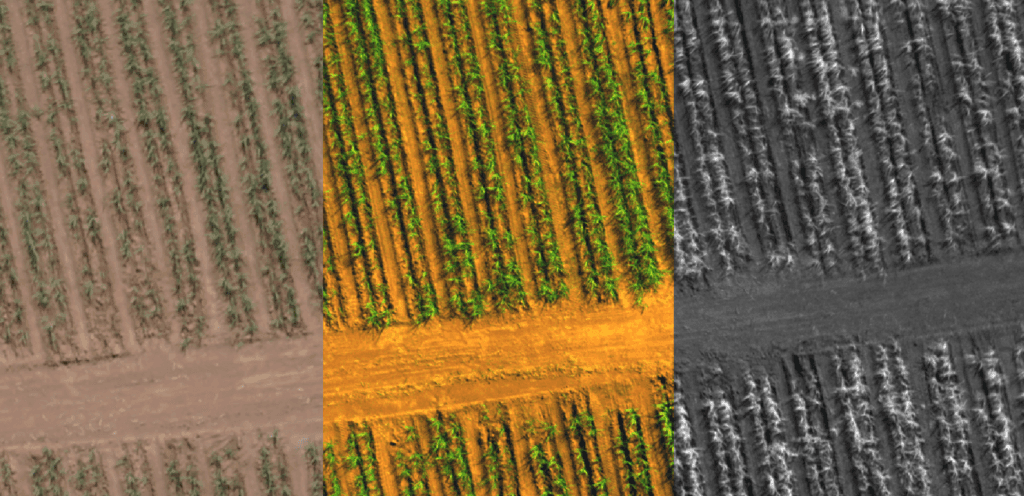

A curiosity about the NIR band spectrum is that it has different reflectance characteristics between monocot and dicot plants due to the internal structure of the leaf, which is differentiated in the leaf mesophyll of the plants.

XFARMING
To deliver the complete sugarcane solution, XMobots has developed the XFarming Cana software, which uses cutting-edge technology to deliver strategic data and information for maximum crop productivity.
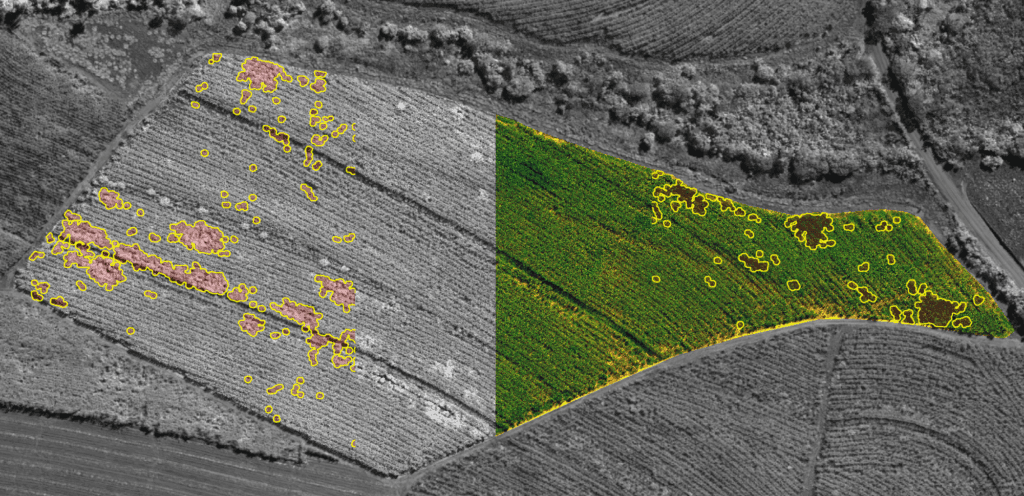
XFarming Cana is responsible for using post-processed and geo-referenced images for line restitution, cane field failure analysis - both with RGB and XMC images - as well as its newest release: the innovative matology plug-in, which allows for the automatic detection of weed clumps.
The process of locating ratoons in sugarcane fields is simple, but it involved extensive and laborious work to train the software's neural network. For this flow, we fly our drones with the XMC camera on board and, in this way, the NIR band provides information so that, through Artificial Intelligence, we can detect invaders and differentiate between broadleaf, narrowleaf and sugarcane. Based on this, XFarming carries out the process of detecting plots, enabling the user to measure the level of invasive infestation in their analyzed area. This results in a georeferenced shape of the locations for localized application of pesticides or for the process of identifying the species present in the plots, both of which can be carried out with the DRACTOR 25A drone.
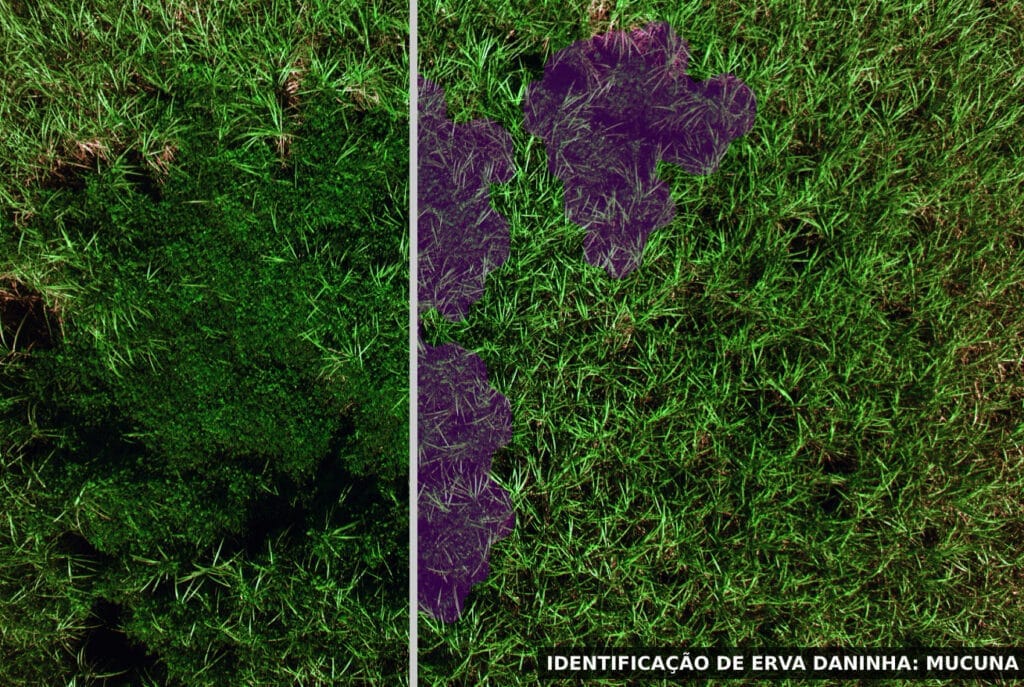
Another totally disruptive and unique possibility is the identification of weed species. For this stage, which is still in Beta, the DRACTOR 25A needs to be flown, so that a flight plan can be made in XPlanner (XMobots' mission planning software) capable of recording the centroids of each detected trailer: then the sampling flight is made to the region of interest and a photo is taken between 3 and 5 meters high of the target to obtain a high-resolution image. It is from this that XFarming identifies which species are present in the analyzed photo.
XFarming Matology mode has 3 modules:
- Pre-harvest (identification of broadleaf occurrences for intervention with Dractor 25A);
- Post-emergence planting or ratooning;
- Reform.
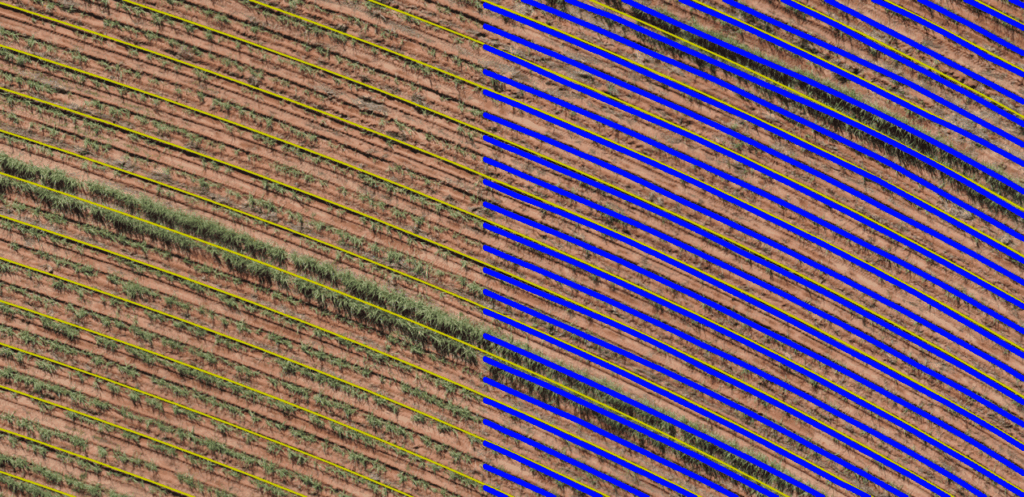
In addition to the matology, one of XFarming's great differentials compared to the competition is the automatic line restitution in the cane fields. Currently, other companies on the market offer the restitution function manually and without multiprocessing.
In XFarming, rows are generated using multi-plots, in which the software analyzes the hardware, optimizing the largest possible number of plots for processing and bringing greater agility and operational performance.
In XFarming, automatic line restitution can be done in 2 ways:
- Main Line: in which a line is determined that best represents the pattern of:
- Planting line orientation
- Homogeneous development
- Longer line
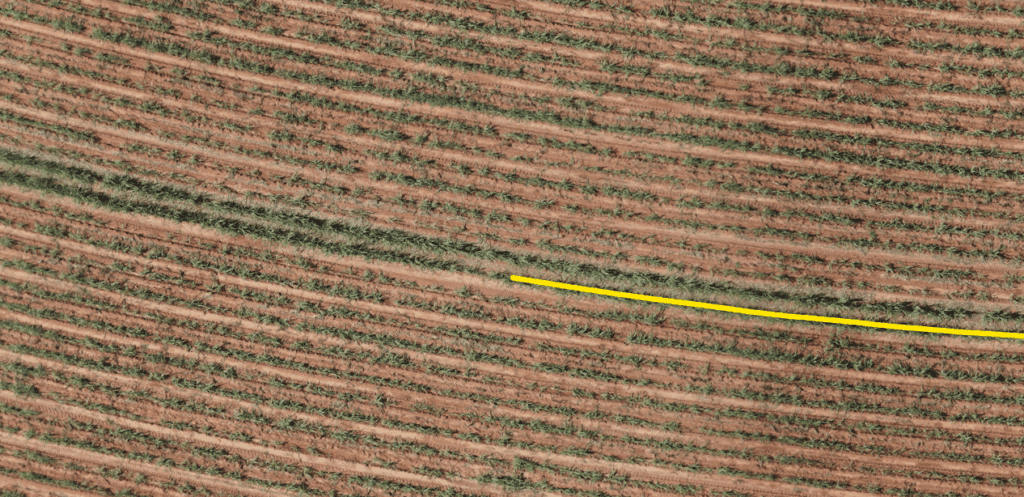
- Lines by project: the planting project is used for the restitution of the lines, with each projected line becoming a main line for restitution.
When processing faults, XFarming gives the client the option of determining the analysis intervals and, with this, each interval is colored with different colors, helping to interpret the results.

In addition to all the features mentioned above, XFarming automatically creates reports with data generated from processing the features of:
- Line restitution;
- Faults;
- Parallelism;
- Matology.
In addition to being able to export the data from the analyzed areas according to the intervals where some agronomic intervention is desired.

XFarming is a plug-in integrated into QGIS. Very practical and intuitive, its use is activated through credits consumed according to the number of hectares processed. Access to the credits is very simple: just go to our website, register and follow the step-by-step installation process, requesting the purchase of the credits.

Take the opportunity to get in touch with our team and find out more about the potential of these products and other software, as well as drones, which are also produced 100% in Brazil.
Send an e-mail to contato@xmobots.com.br or call (16) 3413-0655.
Visit our website: http://www.xmobots.com.br
Bruno Mazzon
Agronomist - Technology and Agronomic Innovation Manager at XMobots