
The São Francisco Valley, located in the northeast of Brazil, has become an extremely important region for fruit growing. With its favorable climate, fertile soil and technological advances, the Valley has become a veritable paradise for growing tropical fruit.

Its importance goes beyond national borders, as it supplies both the domestic and international markets with a wide variety of high-quality fruit.
With high temperatures and generous sunshine throughout the year, the São Francisco Valley offers ideal conditions for the development of various fruit crops.
In addition, the deep, well-drained soils, combined with the availability of water from the São Francisco River, provide a favorable environment for healthy plant growth.
With the application of advanced cultivation techniques, genetic improvement and the adoption of good agricultural practices, the region has established itself as a center of excellence in fruit production.
Thus boosting the local economy and contributing to the projection of Brazil as a major player in the world fruit market.
Where is the São Francisco Valley?
The São Francisco Valley in Brazil is located in the northeastern region of the country, mainly covering the states of Bahia and Pernambuco. The Valley is known for its production of irrigated fruit, especially grapes, mangoes, bananas and other tropical crops.

The main cities in the region are Petrolina, in Pernambuco, and Juazeiro, in Bahia, both located on the banks of the São Francisco River, which runs through the valley. This region is an important agricultural production area with a semi-arid climate and a high dependence on irrigation for agriculture.
The importance of the São Francisco Valley for fruit growing
The São Francisco Valley is extremely important for fruit growing in Brazil. The region is known as the "Irrigated Fruit Growing Hub". After all, it is responsible for a significant production of tropical fruit, both for the domestic market and for export.
Some of the main aspects that make the São Francisco Valley a privileged place for fruit growing are:
1. Favorable climate
The region has a semi-arid climate, with a high incidence of sunlight throughout the year and high temperatures, which is ideal for growing various tropical fruits.
In addition, the low rainfall allows for greater control over irrigation, making it possible to develop efficient drip irrigation systems.
2. Fertile soil
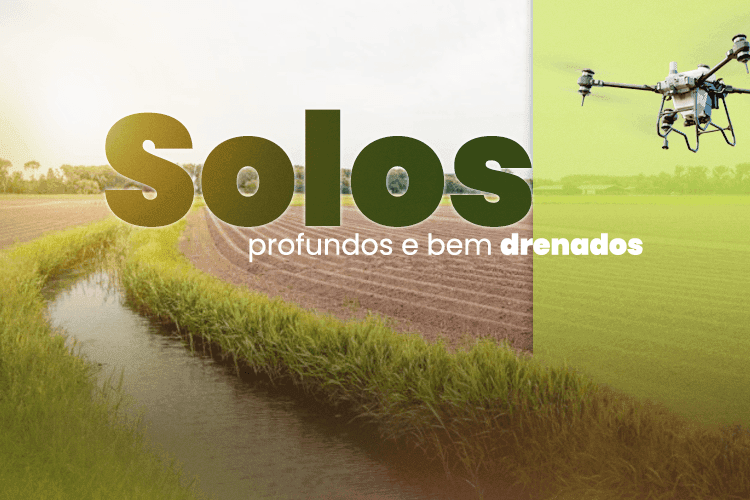
The São Francisco Valley has deep, well-drained soils made up of a combination of sand and clay, ideal for growing fruit.
These characteristics allow for good plant root development and adequate nutrient absorption.
3. Water availability
The region is bathed by the São Francisco River, which provides water for irrigating crops.
The construction of dams and water collection and distribution systems along the river has made it possible to make efficient use of water resources, allowing fruit to be grown all year round.
4. Technology and knowledge
Over the years, the São Francisco Valley has become a benchmark in terms of fruit-growing technology and knowledge.
Producers and research institutions have invested in advanced cultivation techniques, plant genetic improvement, pest and disease control, and the adoption of good agricultural practices, resulting in high quality production and productivity.
Crop management is also essential to guarantee a good harvest. That's why investing in precision agriculture, with mapping and spraying drones, is an investment that is on the rise in the sector.
The spray nozzles are capable of reaching ranges of up to 15 meters, making it possible to reach more than one flowerbed in a straight flight.
Aerial spraying is also beneficial for controlling pests on trees such as banana, papaya, avocado and grapevine, among others, and for reaching areas that are difficult to access, such as rough terrain.

5. National and international markets
The strategic location of the São Francisco Valley, with access to important ports and airports, facilitates the export of fruit produced in the region to various international markets.
In addition, its proximity to large urban centers in the northeast of Brazil guarantees consistent demand on the domestic market.
Conclusion
Due to these factors, the São Francisco Valley has become one of Brazil's main fruit production centers, contributing significantly to the regional and national economy, generating jobs and boosting the country's agricultural sector.
With the use of the technology offered by remotely piloted aircraft, fruit productivity in the country can be raised to a new level!
Are you a fruit and vegetable grower? Don't waste time and boost your crop with XMobots drones.
Find out more at: xmobots.com.br.