
Planning is an essential step for those who want success in agriculture and greater efficiency in the next harvest. That's why, as one harvest comes to an end, it's important to start thinking about the next.

So, if you're a farmer and want practical tips for this planning, you're in the right place. Let's explore steps and considerations to improve results and optimize agricultural production.
So get ready to read a guide with strategies, analysis and smart decisions!
Why prepare for the next harvest?
Planning ahead allows farmers to draw up a strategic plan for the next harvest. This includes making important decisions such as:
- Selecting crops
- Determine the quantity of seeds
- Planning inputs
- Establish a planting and harvesting schedule
- Set realistic goals
This advance preparation helps to optimize resources and maximize operational efficiency. So here are 10 tips for planning the next harvest!
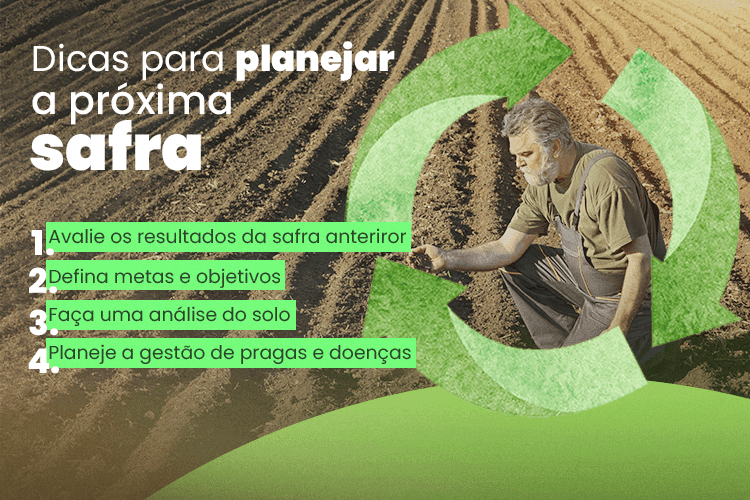
1. Evaluate the results of the previous harvest
After the harvest, carry out a detailed analysis of the results obtained during the season. To do this, take into account different factors such as crop performance and customer feedback.
Also, don't forget to list the challenges faced and the lessons learned. This evaluation will be valuable for identifying points for improvement and gathering relevant information for the next harvest.
2. Set goals and objectives
Before starting the harvest, set clear and realistic goals. In this list, include:
- Production target
- Financial target
- Product quality target
- Among others, which will vary according to the crop and the farmer's objective
These targets will be used as a guide to measure the progress and success of the harvest.
3. Do a soil analysis
Carry out a soil analysis on all growing areas. This will provide crucial information about the chemical and physical conditions of the soil.
Based on this analysis, you can adjust the application of fertilizers and correctives according to the specific needs of each area.
4. Plan pest and disease management
Assess the pest and disease challenges faced in the previous harvest and draw up an integrated management plan.
Consider using resistant plant varieties, crop rotation, regular monitoring and the use of pesticides when necessary.
This helps to minimize the impact of these problems and ensure the health of the crops.
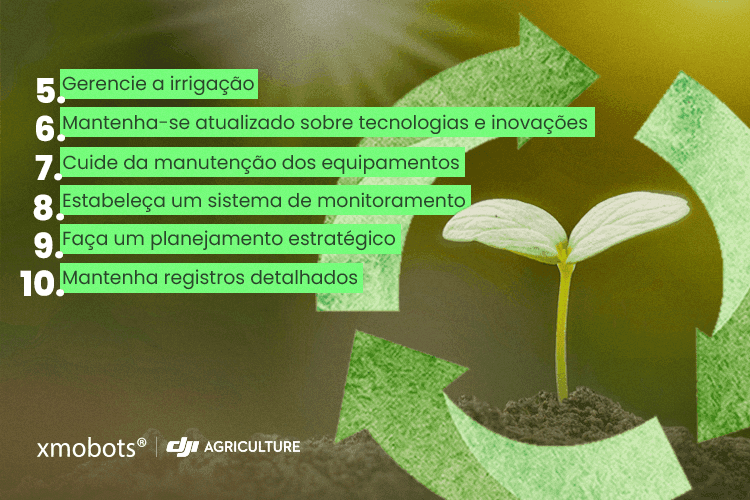
5. Manage irrigation
Consider the crop's irrigation needs and plan water availability strategically.
When an irrigation system is installed, use efficient irrigation techniques, such as sensor-controlled systems, to ensure proper and efficient use of water.
6. Keep up to date with technologies and innovations
Be aware of new technologies and innovations in the agricultural sector. This includes the use of drones in spraying, remote monitoring systems, farm management applications, and more.
Stay up to date on best practices and adopt the technologies that can bring benefits to your production system.
7. Take care of equipment maintenance
Make sure that all agricultural equipment is in good working order. Carry out regular preventive maintenance to avoid failures during the harvest.
This includes overhauling tractors, implements, sprayers and harvesters.
8. Set up a monitoring system
Implement a monitoring system to keep track of the crop's progress. This can involve monitoring plant growth, analyzing weather data, controlling pests and diseases and assessing the nutritional status of the plants.
Use this information to make assertive decisions and adjustments throughout the harvest.
9. Make a strategic plan
Develop a detailed plan for the next harvest. Determine which crops will be grown, consider factors such as the market, demand and economic viability.
Establish a planting and harvesting schedule, taking into account weather conditions and the duration of each crop.
10. Keep detailed records
Keep accurate records of all the activities carried out during the preparation and execution of the harvest. This includes information on the inputs used, the application of fertilizers and pesticides, and the management practices adopted, among others.
These records will be valuable for evaluating performance and for future reference.
Conclusion - next harvest
Finally, remember that preparing for the next harvest is an ongoing and dynamic process.
With each harvest, you will learn valuable lessons and be able to make adjustments to further improve the efficiency and success of your farming operations.
Don't waste time, enjoy the benefits of the spraying drone at DAASFY, visit: daasfy.com.br.
Take advantage of the DJI AGRAS T40 and start the harvest with maximum production. Visit: https://xmobots.com.br/djiagriculture/agras-t40/.
Here at XMobots, we make it easy to buy your agricultural drone. Check out the options and conditions in the Buying Guide Ebook: https://drones.xmobots.com.br/ebook_financiamentos.