
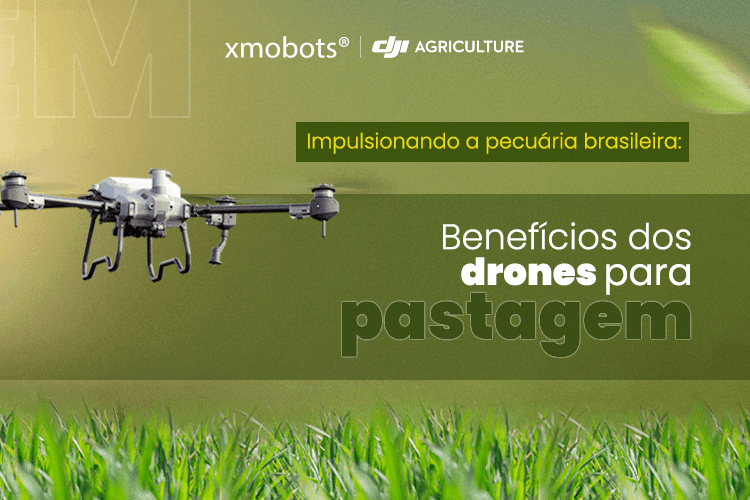
Pasture plays a fundamental role in Brazilian agribusiness, being one of the main pillars of livestock production.
Its importance is related to several factors that directly impact the country's economy. Here are some key points that highlight the importance of pasture in Brazilian agribusiness:
1. Extensive livestock farming
Livestock farming is a sector of great importance in Brazilian agribusiness.
Large areas of Brazilian territory are dedicated to the production of cattle, sheep and horses, and pasture is essential to ensure the proper nutrition and development of these animals.
2. Meat and milk production
Pasture plays a vital role in meat production, providing food for the cattle that will be slaughtered.
Therefore, proper pasture management contributes to the productivity and quality of the meat produced. Pasture is also essential for milk production, being the basis of dairy animals' diet.
3. Exports of livestock products
Brazil is the largest exporter of beef in the world, and all this meat is produced on pasture.
The availability of extensive pastures suitable for animal husbandry gives the country a competitive advantage in this sector.
The quality of the pasture and the correct management of the animals contribute to obtaining high quality livestock products and food safety, which favors international demand for Brazilian products.
4. Job creation and regional development
Livestock farming generates a significant number of direct and indirect jobs in various regions of Brazil.
These activities boost the local economy, contributing to the development of rural communities and keeping people in the countryside.
5. Sustainability and resource conservation
Proper pasture management also plays a crucial role in conserving natural resources such as water and soil.
Sustainable practices, such as pasture rotation, pest control and the efficient use of inputs, help preserve soil fertility and minimize the environmental impact of livestock production.

How do agricultural drones contribute to pasture maintenance?
Spraying drones play an important role in pasture maintenance, offering significant benefits to farmers. Here are some ways in which drones contribute to pasture maintenance:
1. efficiency in the application of inputs
Spraying drones are capable of precisely applying pesticides, such as herbicides and fertilizers, to the pasture.
Unlike traditional methods, where inputs are applied manually or by ground equipment, drones can fly at low altitude and apply products in a uniform and controlled manner.
This helps to maximize the efficiency of inputs, reduce waste and avoid over-application.
2. Access to hard-to-reach areas
In large areas of pasture or hilly terrain, it can be difficult and time-consuming to apply inputs evenly and efficiently.
Spraying drones can overcome these challenges by flying over areas that are difficult to access, such as steep slopes or uneven terrain.
This ensures that all parts of the pasture are treated properly, even in places that are difficult for ground equipment to reach.
3. Reducing human and chemical exposure
Conventional pesticide spraying can expose operators to potentially dangerous substances.
With the use of spraying drones, it is possible to significantly reduce human exposure to these products.
Operators can control the drones remotely, remaining at a safe distance during the spraying process.
4. Preservation of pasture and soil
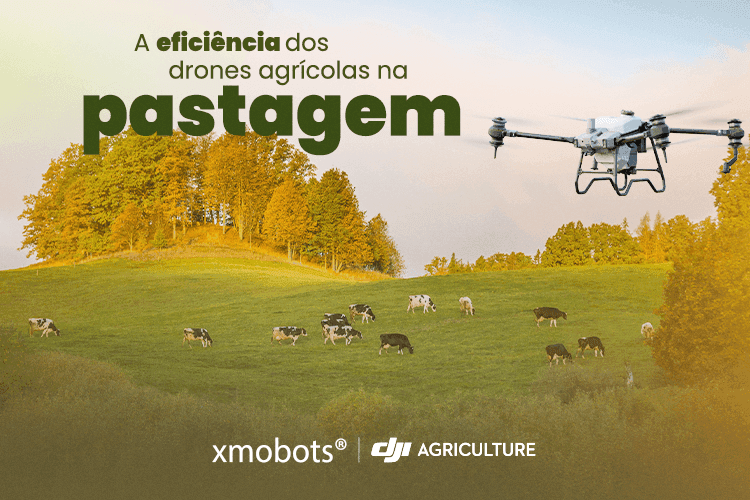
Precise and controlled spraying of inputs with drones helps preserve the health of the pasture and the soil.
The uniform application of herbicides enables effective control of invasive plants and weeds.
In addition, the correct application of fertilizers allows nutrients to be distributed in a balanced way, ensuring healthy pasture growth.
5. Practicality in areas with obstacles
The drones are equipped with an advanced mapping and flight planning system, allowing the user to isolate obstacles such as fences, posts, bushes and trees, enabling the application of pesticides in areas previously considered inaccessible.
This technology guarantees the safety of the equipment and facilitates mechanization, providing a more efficient application.
6. Agricultural drone for planting or renovating pastures
In addition to applying liquid inputs, agricultural drones have a specific accessory for dispersing solids, called a "Dispenser". This accessory allows seeds of the forage species that will form the pasture to be dropped onto the ground.
7. Versatility in pest control
In addition to applying seeds, the Dispenser is also an excellent tool for applying granulated insecticides to control ants, termites or leafhoppers, which cause major losses in livestock farming.
Which drones to use?
Here at XMobots, we prioritize sustainability through technology. That's why we work with spraying and mapping drones that guarantee the best benefits for your pasture.
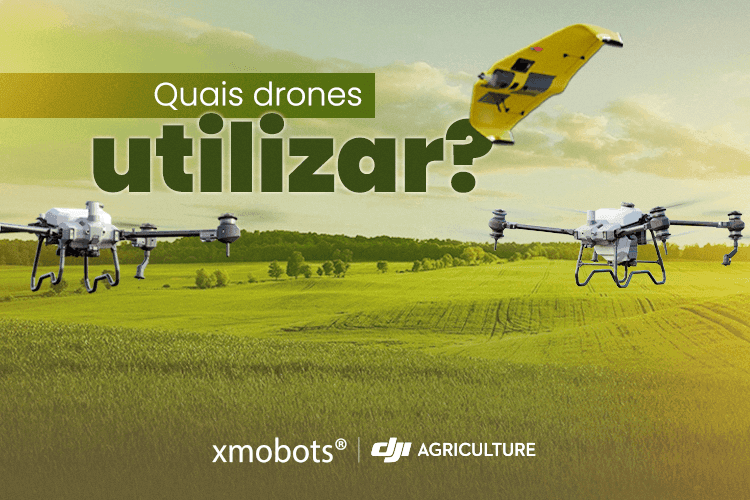
First of all, we recommend Arator 5C, an original XMobots product that carries out fast and accurate mapping, guaranteeing a georeferenced map with high-resolution images of the pasture, which will reveal areas that deserve to be investigated, whether due to low growth, abnormal coloration, "spots" or the presence of invasive species.
We also work with the DJI AGRAS range, in which the T20P and T40 versions are available, which provide targeted, practical and efficient spraying and guarantee water savings.
Find out more about them at:
- https://xmobots.com.br/arator-5c/
- https://xmobots.com.br/djiagriculture/agras-t20p/
- https://xmobots.com.br/djiagriculture/agras-t40/
Conclusion - Drone in the pasture
In short, pasture is the basis for the success of tropical livestock farming, and of paramount importance in the performance of agro exports.
The meat, milk and dairy products produced on our pastures generate jobs, regional development and prosperity for the country.
Sustainable practices for the management and conservation of natural resources are fundamental to guaranteeing the productivity and sustainability of the agricultural sector in Brazil.
Spraying drones are a valuable tool for pasture maintenance.
They offer efficiency in the application of inputs, access to hard-to-reach areas, reduced human exposure to chemicals, preservation of the pasture and soil, as well as making it possible to monitor and analyze pasture health.
This technology contributes to the optimization of livestock production and the sustainable management of pasture areas.
Would you like special conditions that make it easier to pay for your drone? Then take a look at our financing options at: https://drones.xmobots.com.br/ebook_financiamentos.