
Today we're going to delve into the world of agricultural drones and their role in controlling phytosanitary diseases such as downy mildew, powdery mildew and rust, which plague crops.

By combining technological resources with the principles of agronomy, drones are proving to be a promising and effective solution in the fight against these diseases, offering precision application, reduced drift, greater accessibility on rough terrain, intelligent monitoring, time and economic efficiency, as well as contributing to environmental sustainability.
In this article, we'll dive into the technical aspects of these benefits, highlighting how this approach drives agriculture towards more productive practices.
Learn about mildew, powdery mildew and rust
Although they are all caused by fungi and have similar symptoms, it is important to identify the details that differentiate them. After all, you need to use the right fungicide for each of them so that they are combated completely.
Check out the specifications of each one below:
Mildew
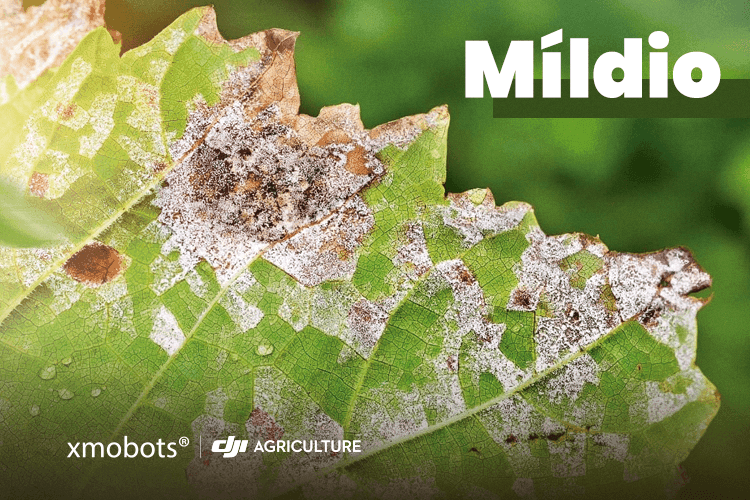
It is a disease caused by an oomycete (false fungus) belonging to the Peronosporaceae family. It affects various plants, such as soybeans, potatoes, tomatoes, vines, cucumbers, among others.
The oomycete develops in humid environments and mild climates, generating light green to yellow spots on the upper part of the leaf, which can become dark (necrotic) as the disease worsens. A gray mold appears on the underside of the leaf, which can cause premature plant death. The symptoms of downy mildew begin to appear between the fifth and seventh day after infection and can be seen on various plant structures.
The symptoms of downy mildew begin to appear between the fifth and seventh day after infection and can be seen in various plant structures.

Powdery mildew
Also known as "white mold", it is caused by various types of fungi.
It is characterized by a thin layer of mycelium and spores that develop on the aerial part of the plant, which can evolve into small white dots and total coverage of the infected part, leading to premature leaf fall.
It is commonly transmitted by wind or insect vectors and feeds on the contents of cells.
It occurs in conditions of high humidity and hot or cold temperatures, and can also occur in dry and hot weather, affecting a wide variety of plants, such as soybeans, tomatoes, beans, roses, vines and various agricultural crops.

Rust
Rust is a disease caused by fungi of the genus Puccinia, Uromyces, among others. It attacks various plants, such as soybeans, wheat, corn, coffee and fruit.
Rust is characterized by the formation of yellowish, orange or rusty spots or pustules on the leaves, stems and fruit of plants.
This disease can lead to significant yield losses and irreversible damage to plants.
The control of these diseases is essential to ensure the health of crops and the sustainability of agriculture, and this is where spraying drones demonstrate their effectiveness, helping farmers to combat these threats more precisely and efficiently.
Benefits of drones in the fight against disease
Spraying drones have brought several benefits in the fight against mildew, powdery mildew and rust, bringing revolutionary advances in agronomic practices. The most important advantages include:
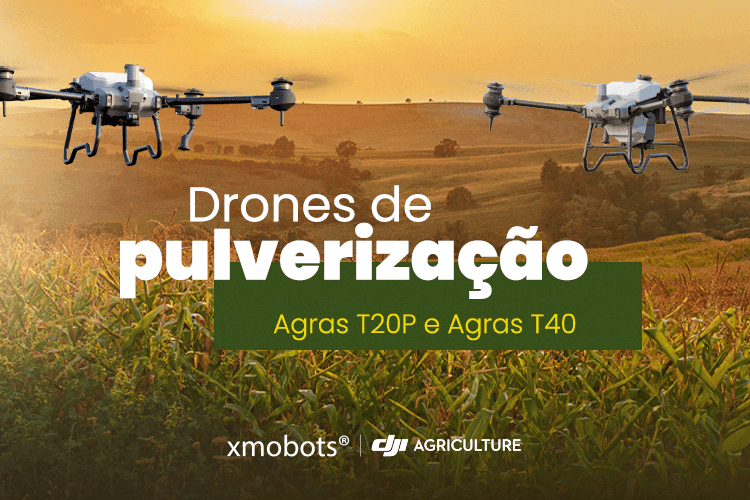
1- Precise application: Drones enable precise distribution of plant protection control agents, such as fungicides, herbicides or insecticides, guaranteeing uniform coverage of the plants. This precision avoids wasting agricultural inputs and reduces environmental exposure.
2- High Coverage: The drones have a down wash effect, capable of reaching the top and bottom of the sheet, guaranteeing uniform coverage on both sides, leaving it totally protected.
3- Reducing Drift: Application via drones minimizes drift, i.e. the unintentional dispersal of chemical products to adjacent areas. This is essential to prevent the pesticide from reaching other crops and environments, protecting natural ecosystems and ensuring the safety of target crops.
4- Greater Accessibility: In terrain that is difficult to access or in areas with uneven topography, drones have a great advantage, making it possible to reach places that are difficult for conventional ground equipment to reach. This enables comprehensive protection of the entire crop, even in mountainous or rugged terrain.
5- Intelligent monitoring: Some mapping drones used in precision agriculture are equipped with multispectral or infrared sensors and cameras. These sensors provide valuable information on the state of plant health, enabling early identification and optimizing treatment application.
6- Time and Economic Efficiency: The use of drones in crop spraying speeds up the application process and reduces the time needed to cover large areas, increasing agricultural productivity and reducing operating costs.
7- Environmental sustainability: With precise application, spraying drones promote a more sustainable approach to plant health management, reducing environmental impact and promoting more ecosystem-friendly agricultural practices.
Attention!
It is important to note that preventive fungicide application is the best method of crop protection.
Conclusion- mildew, powdery mildew and rust
In short, the adoption of drones in agriculture represents an innovative and efficient technological solution for controlling phytosanitary diseases such as downy mildew, powdery mildew and rust, boosting agricultural production in a sustainable way and guaranteeing human food security.
At XMobots, we have options for spraying drones that are efficient at applying pesticides: DJI AGRAS T20P and T40.
Find out more about them at:www.xmobots.com.br/djiagriculture.